
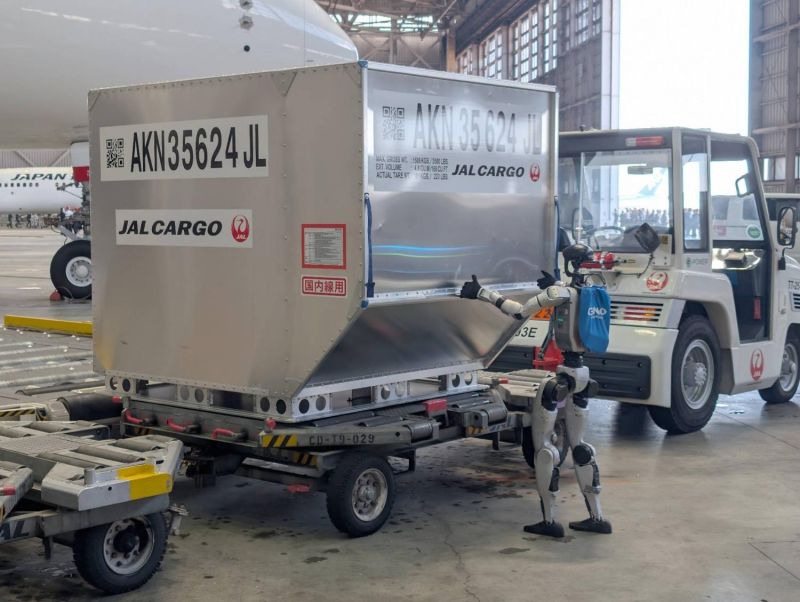
Japan Airlines (JAL) is set to trial humanoid robots for ground handling operations at Haneda Airport, starting in May, in partnership with GMO Internet Group. The initiative, running through 2028, marks one of the first real-world deployments of human-shaped robots in airport ramp operations. Initially operating in controlled environments, the robots will gradually be introduced into live workflows.
Key takeaways
- Humanoid robots, including a Unitree model, will handle tasks like pushing cargo onto conveyor belts and assisting with baggage handling, with future plans for cabin cleaning and ground support equipment operation.
- The humanoid form factor allows integration without major modifications to existing airport infrastructure or aircraft structures, potentially reducing adoption costs.
- Current limitations include a battery life of only two to three hours, requiring recharging, which restricts immediate use in high-throughput environments.
- The trial reflects broader automation trends in aviation, with specialized systems like automated baggage vehicles already deployed in over 15 countries, but humanoids offer flexibility for human-centric environments.
Labor shortages, driven by Japan's aging population and rising travel demand, are the key motivator. JAL Ground Service president Yoshiteru Suzuki noted the robots will reduce workers' burden, while safety management remains under human control. The trial will serve as a test case for humanoid robotics in complex industrial settings, with success potentially demonstrating economic viability beyond controlled demonstrations.
Source: Robotics & Automation News (roboticsandautomationnews.com) · Published 2026-04-30 · “Japan trials humanoid robots for airport operations as labor shortages intensify”