
Key takeaways
- Intent-based automation: Kuka is moving from rule-based, pre-programmed systems to intent-based ones, where users define outcomes and the system determines how to achieve them, reducing detailed programming needs.
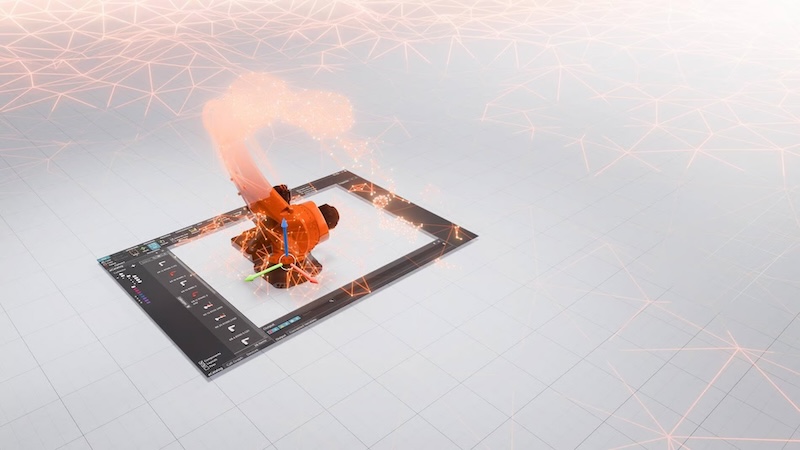
- Kuka AMP platform: The new Automation Management Platform, unveiled at GTC, connects hardware, software, and simulation tools into a unified environment, enabling software-defined automation with orchestration and decision-making at the software layer.
- Automation 1.0 remains foundational: CEO Christoph Schell emphasized that proven, rule-based automation continues to deliver stability and productivity, especially in high-volume and safety-critical environments. Automation 2.0 expands, not replaces, existing systems.
- Investment and expansion: Kuka reported €213 million in R&D spending in 2025, its highest to date, and is building AI/software centers in Silicon Valley and Asia. China revenue exceeded €1 billion for the first time.
For manufacturers, the strategy signals a hybrid near-term reality where AI augments existing automation rather than replacing it outright, potentially accelerating deployment and increasing flexibility in production configuration.
Source: Robotics & Automation News (roboticsandautomationnews.com) · Published 2026-04-13 · “Kuka outlines ‘Automation 2.0’ strategy, combining AI software with industrial robotics”