
In context
In late 2025, the industrial automation sector was increasingly focusing on AI-driven collaborative robots to address labor shortages and enhance warehouse efficiency. This partnership between a major automotive technology supplier and a robotics startup underscored the trend of cross-industry collaboration to accelerate cobot deployment.
What was reported
Aptiv and Robust.AI announced a strategic cooperation to co-develop AI-powered collaborative robots, combining Aptiv's portfolio—including Wind River platforms—with Robust.AI's robotics expertise and human-centered design.
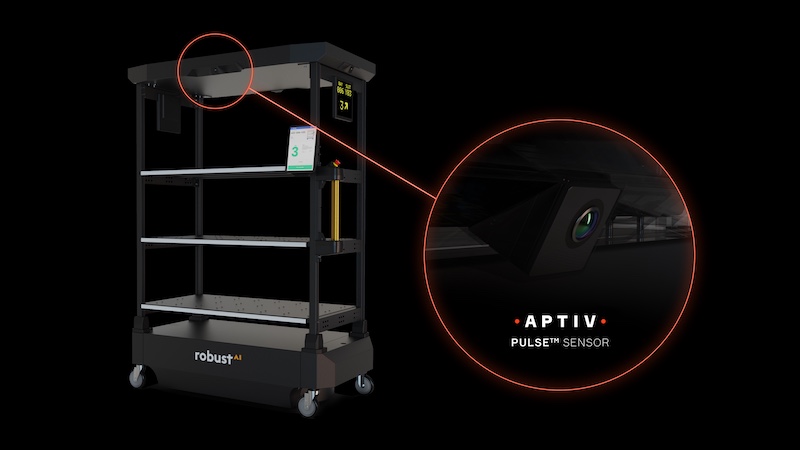
The joint solution will integrate Aptiv's perception technologies (PULSE Sensor, Radar ML, Behavior ML) with Robust.AI's platform, which features AI-powered optical sensors, real-time SLAM, a patented holonomic drive, and a force-sensitive handlebar for human control. The expanded proof-of-concept will leverage Aptiv compute and Wind River's VxWorks RTOS and Helix Hypervisor for low-latency performance.
Robust.AI's Carter cobot, software-defined to perform fulfillment picking, transport, and mobile sorting, will benefit from Aptiv's expertise in AI models and real-time operating systems, enhancing safe collaboration in dynamic environments. Aptiv's global reach and supply chain will enable scalable production.
“Aptiv’s expertise in developing advanced AI models, sensors, and real-time operating systems for autonomous vehicles will enhance Carter’s ability to safely collaborate with human operators in dynamic, close-quarter environments.”
Why it mattered
This collaboration signaled a convergence of automotive-grade sensing and real-time software with flexible cobot platforms, potentially accelerating the adoption of AI-powered automation in warehouses and industrial settings by offering scalable, multi-functional solutions.
Source: Robotics & Automation News (roboticsandautomationnews.com) · Published 2025-11-11 · “Aptiv and Robust.AI to co-develop AI-powered collaborative robots”