
In context
In mid-2023, collaborative robots were gaining ground in industrial automation, but their limited payloads often restricted them to light-duty tasks. Traditional industrial robots still dominated heavy palletising, leaving a gap for cost-effective solutions that could handle heavier loads while maintaining a small footprint.
What was reported
Omron launched the TM20 collaborative robot, capable of handling a 20 kg payload while keeping a compact footprint and offering a reach of 1.3 meters. The cobot is positioned for tasks such as palletising, where higher payloads are essential.
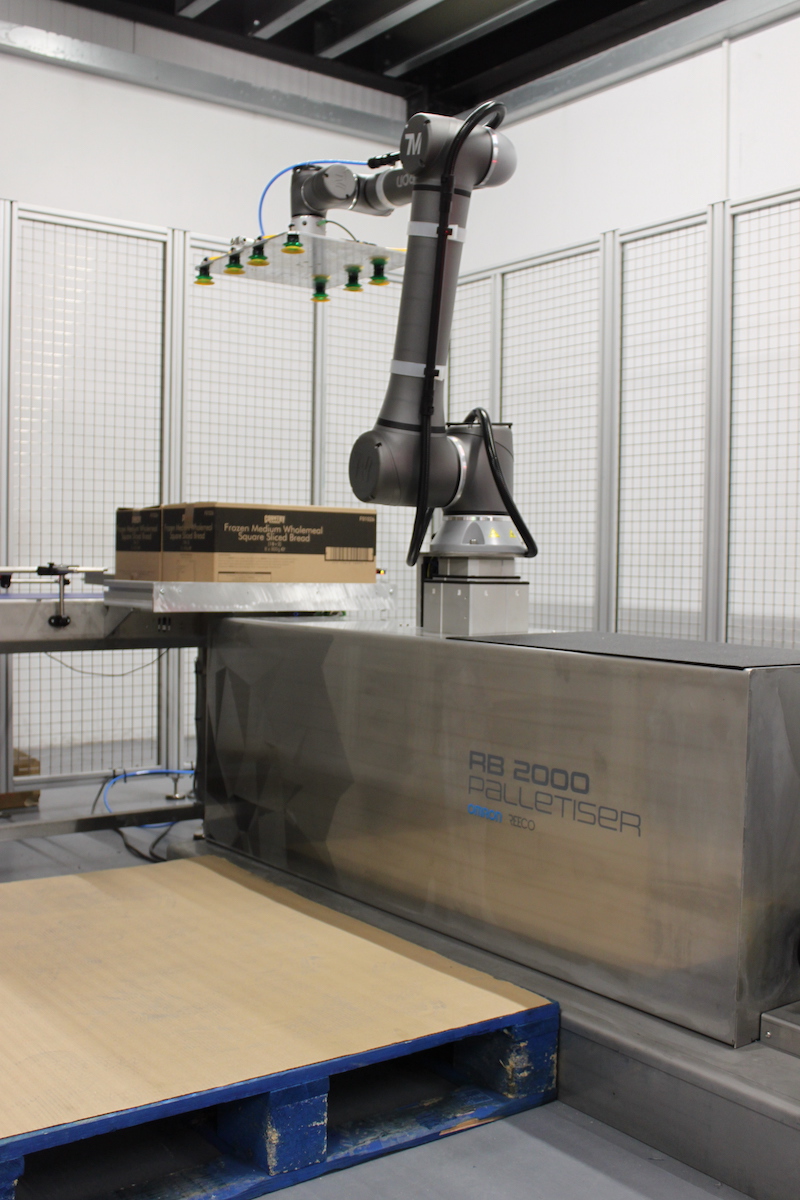
UK solutions partner Reeco quickly adopted the TM20 to expand its palletising range, introducing the RB2000 palletiser. This 20 kg payload, market-ready solution aims to make end-of-line robotic automation accessible to producers of all sizes, according to the report.
The article contrasts traditional industrial robot palletising with cobot palletising. Traditional robots are reliable and fast but expensive and space-intensive. Cobots are smaller, safer, easier to program, and more cost-effective, though historically limited by payload. The TM20's 20 kg capacity is seen as levelling the playing field between the two approaches.
Why it mattered
The introduction of a 20 kg payload cobot expanded the feasible application range for collaborative automation, enabling manufacturers with limited space and budgets to automate heavier palletising tasks without sacrificing floor space or requiring specialised programming skills. This development signalled a broader trend of cobots moving into applications once reserved for traditional industrial robots.
“A cobot palletiser that can lift 20 kg can provide significant benefits for manufacturing facilities.”
Source: Robotics & Automation News (roboticsandautomationnews.com) · Published 2023-07-08 · “Omron launches new collaborative robot with 20 kg payload”