
In context
In 2023, collaborative robots were increasingly adopted in research and industrial settings, with a growing demand for high-precision force and torque sensing to enable delicate tasks. This partnership addressed the need for easy integration of such sensors onto existing robot platforms.
What was reported
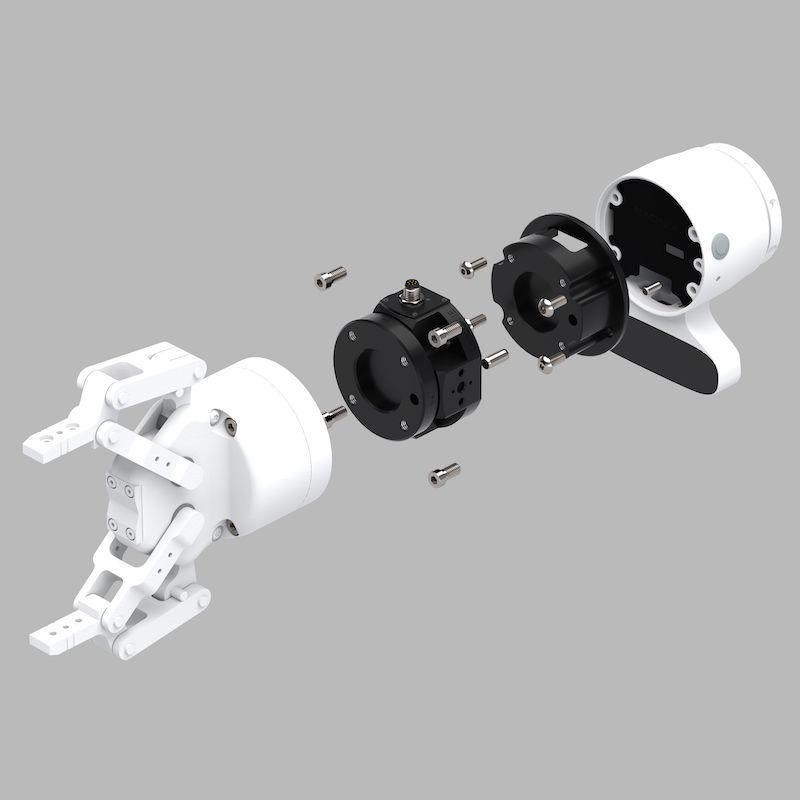
Bota Systems, a developer of multi-axis force-torque sensors, announced a collaboration with Kinova to create the Bota Kinova Kit, which allows quick mounting of the SensONE sensor onto the Kinova Gen3 robot arm. The kit requires only a few screws, simplifying installation.
The SensONE is a six-axis sensor that enhances the end-effector force torque sensitivity of the Gen3, which already has a built-in torque sensor. Kinova's Sales Director noted that adding the Bota sensor significantly improves precision and sensitivity, meeting research lab demands.
At ICRA 2023, Bota also showcased its smallest sensor, the MiniONE, a six-axis sensor weighing 30 g with a 30 mm diameter. It is designed for micro-robotic systems, offering ultra-low-noise, high sensitivity, and plug-and-play installation with built-in temperature sensors and filters.
“While our Gen3 robot already has a built-in torque sensor, adding the Bota sensor takes its precision and sensitivity to a whole new level.”
Why it mattered
This collaboration simplified the integration of high-performance force-torque sensing into a widely used research robot, potentially accelerating development in applications requiring precise interaction, such as medical robotics and micro-assembly, and setting a precedent for sensor-robot compatibility.
Source: Robotics & Automation News (roboticsandautomationnews.com) · Published 2023-05-25 · “Bota Systems and Kinova partner for easy installation of force torque sensors”