
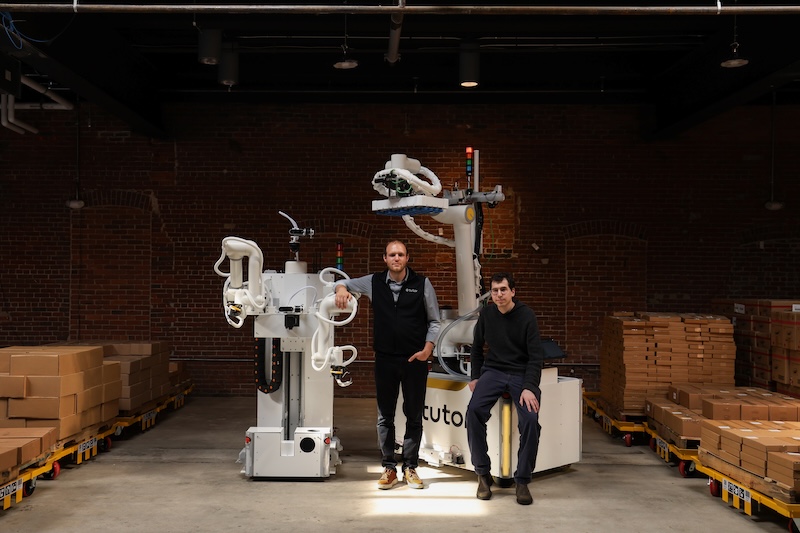
Tutor Intelligence has raised a $75 million Series B led by Andreessen Horowitz, bringing total capital raised to $117 million. The round funds frontier robot foundation model training plus manufacturing and deployment of Sonny and Cassie, the company's robot workers, which run Tutor's models on jobs across the United States. Union Square Ventures and Neo, which led the Series A and seed rounds respectively, also participated.
Key takeaways
- Deployment as training data: Tutor places internet-connected robots in production environments where they perform real work for customers, with input from remote operators called "tutors." Each completed task generates real-world experience data that trains better frontier models, widening what the robots can do and where they can be deployed.
- Full-stack flywheel: The company offers robots, models and deployments as one platform, so each new deployment is intended to strengthen the whole fleet and make robots cheaper and easier to deploy over time.
- Labor-style commercial model: Customers buy robot work by the hour or by the pick, with no upfront purchase and no long-term contract; Tutor handles deployment and maintenance and pushes upgraded software and intelligence to the robots.
- Scale and traction: Tutor says its robots are working in almost four times as many facilities as a year ago, with a target of more than 1,000 robots under contract by the end of 2027, all built and deployed from the United States. Nearly a third of organizations that received robots in the past 12 months were existing customers adding more.
The robots currently operate in large US manufacturing and logistics networks, handling lifting, moving and manipulation of consumer goods such as cereals, snacks, candy, cosmetics, home goods and toys. For manufacturers, the model points to automation bought as a service rather than as capital equipment, aimed at tasks that have resisted conventional robotics.
Source: Robotics & Automation News · Published 2026-11-03T08:41:59 · “Tutor Intelligence raises $75 million to scale robot workforce”